Jinhua, China
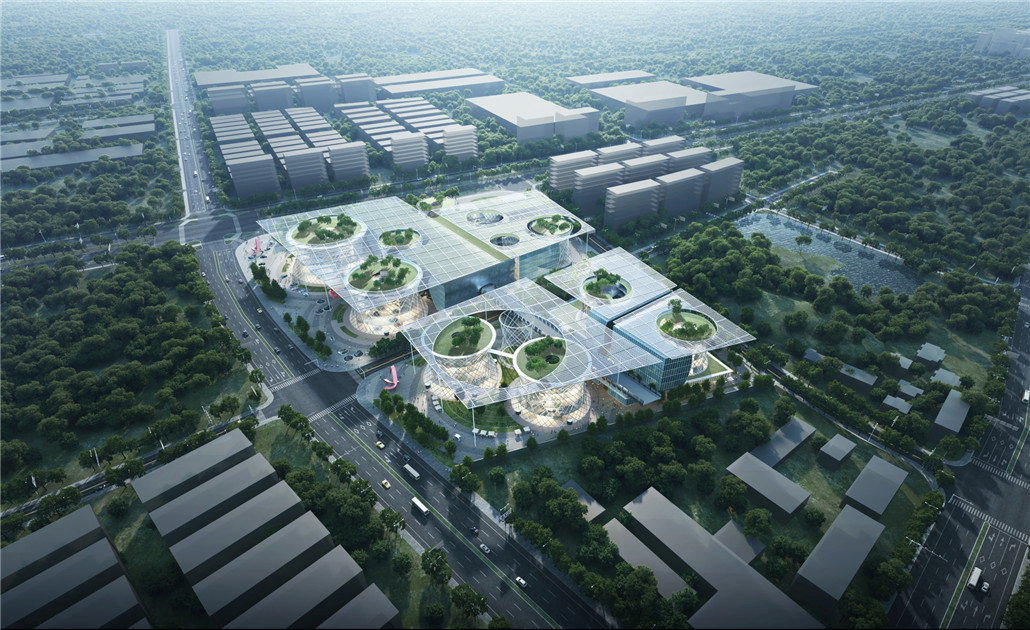
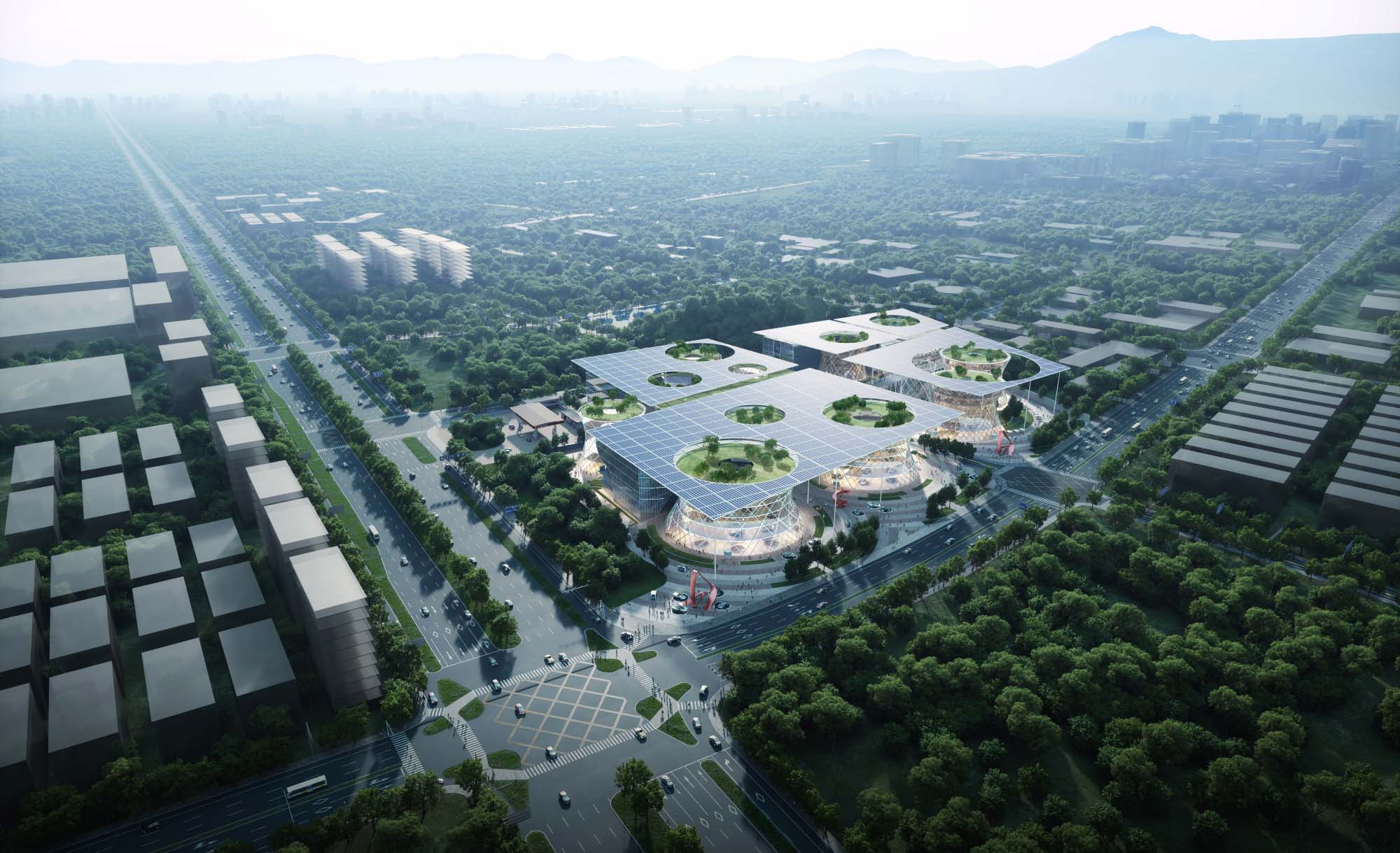
Jinhua has long been an important center for China’s automotive industry, supported by a strong network of vehicle and component manufacturers. With continuous policy support, the city has rapidly developed its new energy vehicle sector and became one of China’s first demonstration cities for EV promotion. The Zhejiang Central New Energy Car-City Square emerged from this context. Beyond commercial and exhibition functions, the project aims to create a new urban platform connected to the future of mobility.
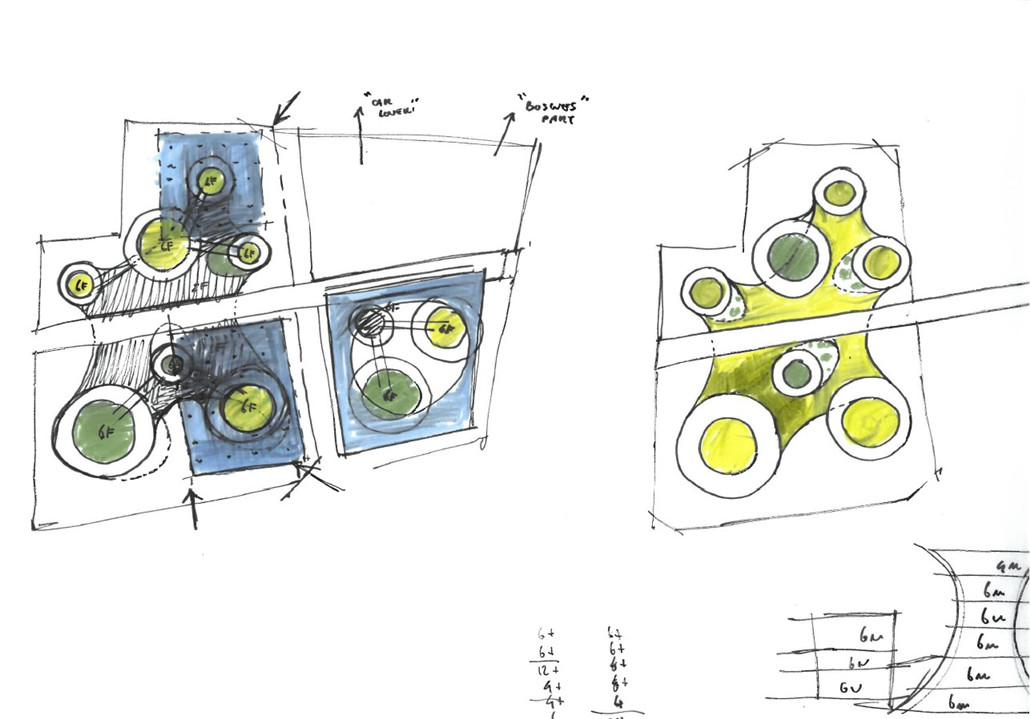
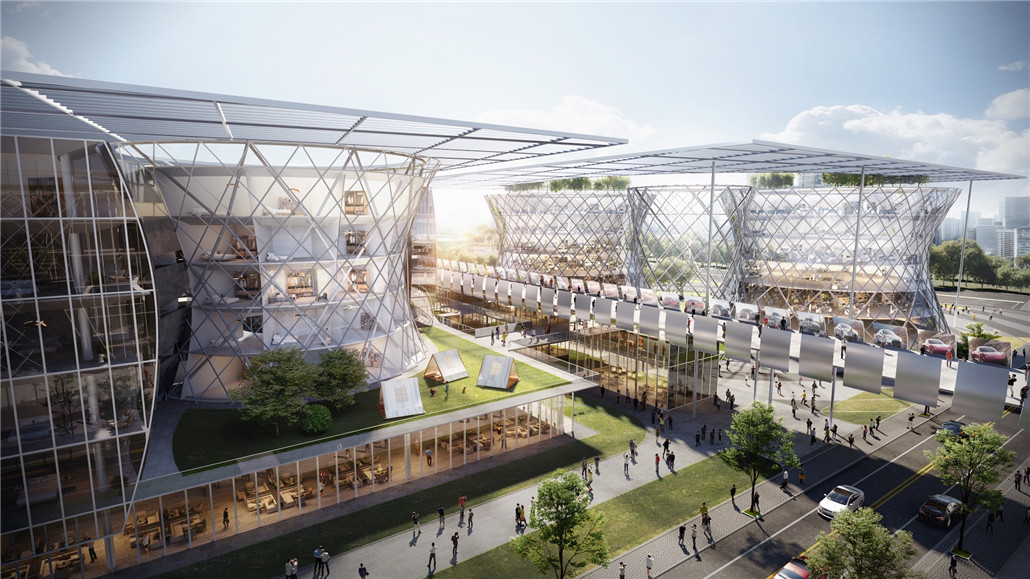
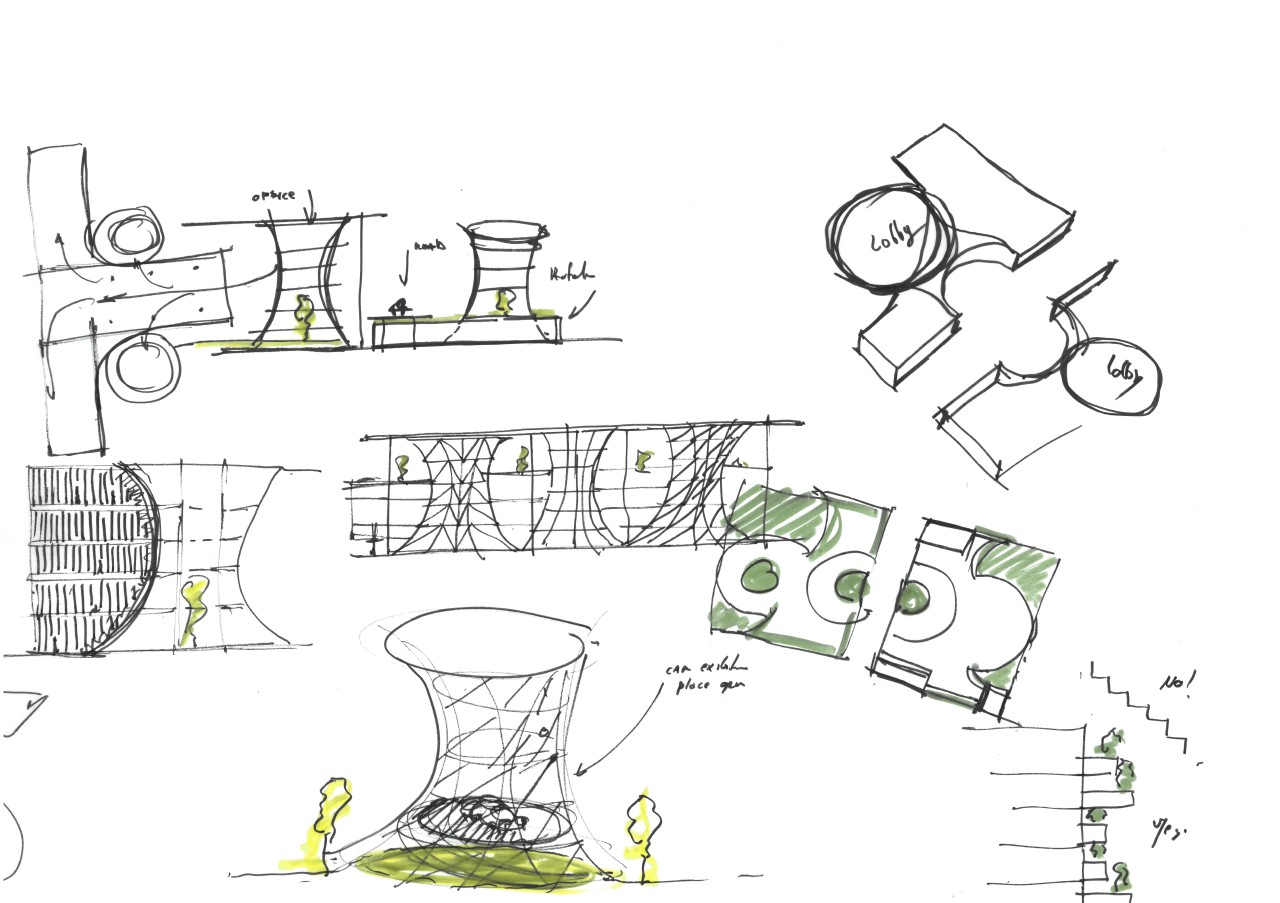
The design draws inspiration from two elements related to automotive culture: mathematical functions describing electric impulses and the aerodynamic coefficient Cx. Rather than treating them as visual symbols, the project transforms these concepts into spatial language. Through wind tunnel simulations, mathematical models, and aerodynamic studies, the architecture explores airflow, motion trajectories, and the invisible forces generated between vehicles and air. These investigations shape a fluid architectural form filled with movement and technological character.
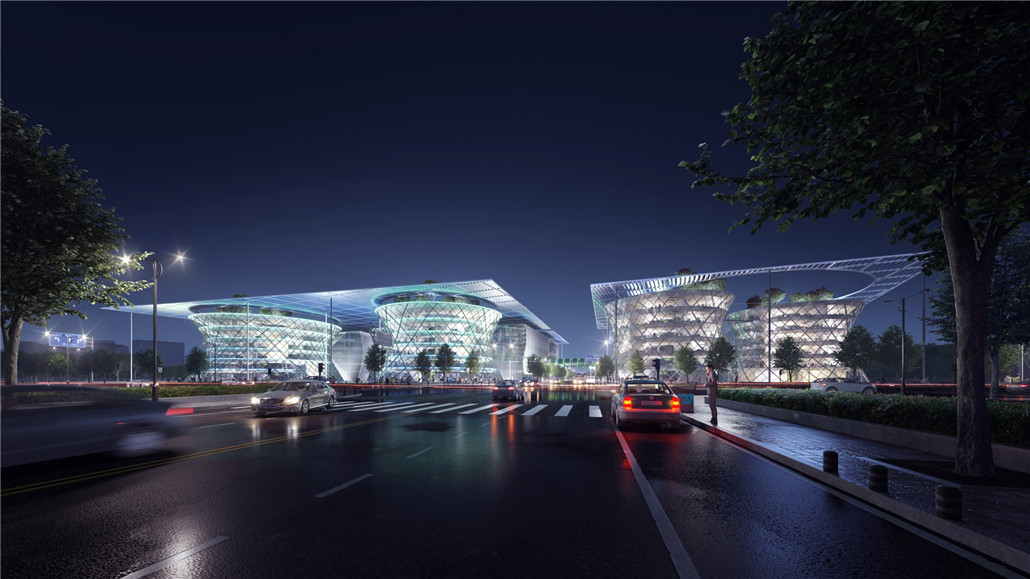
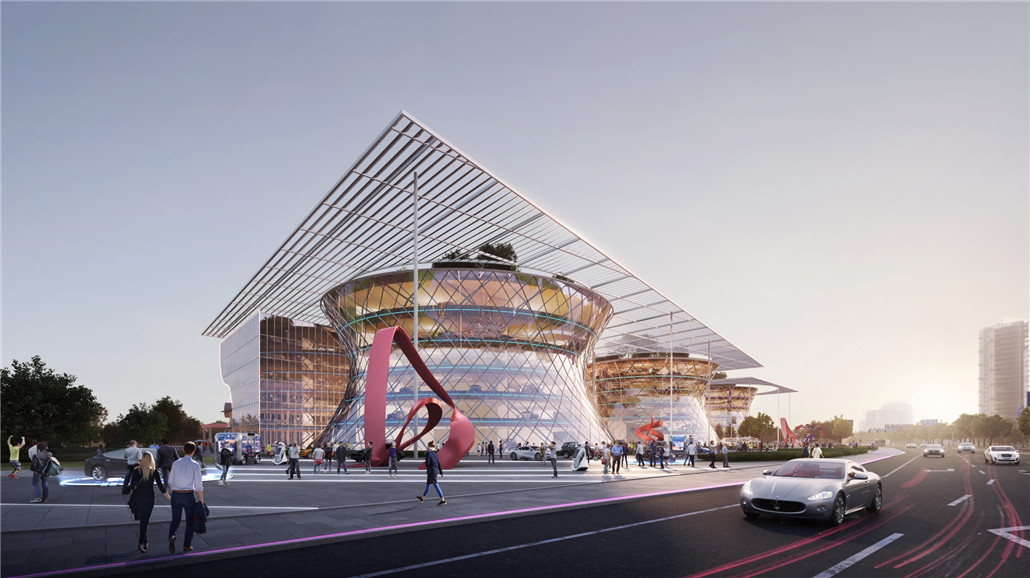
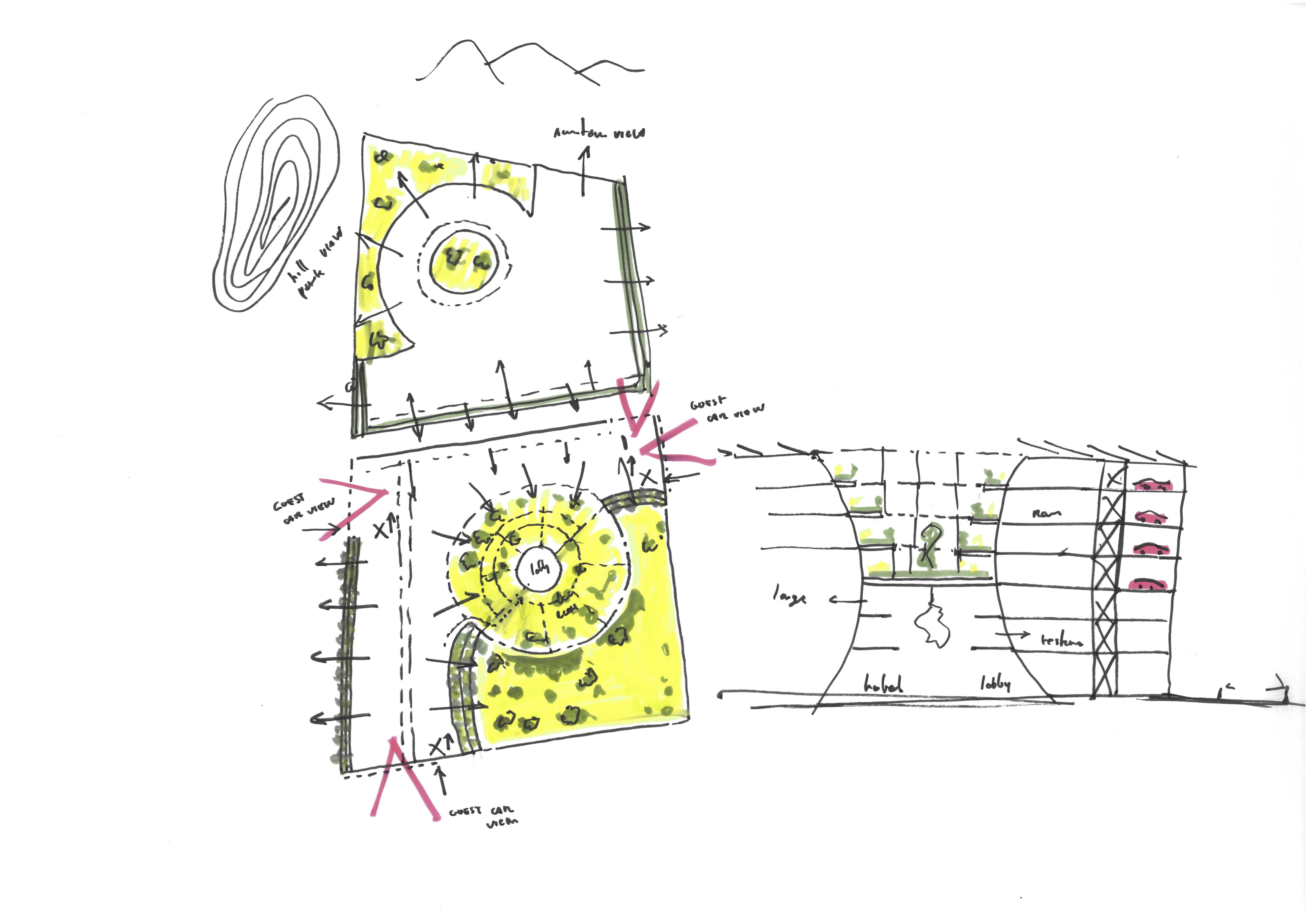
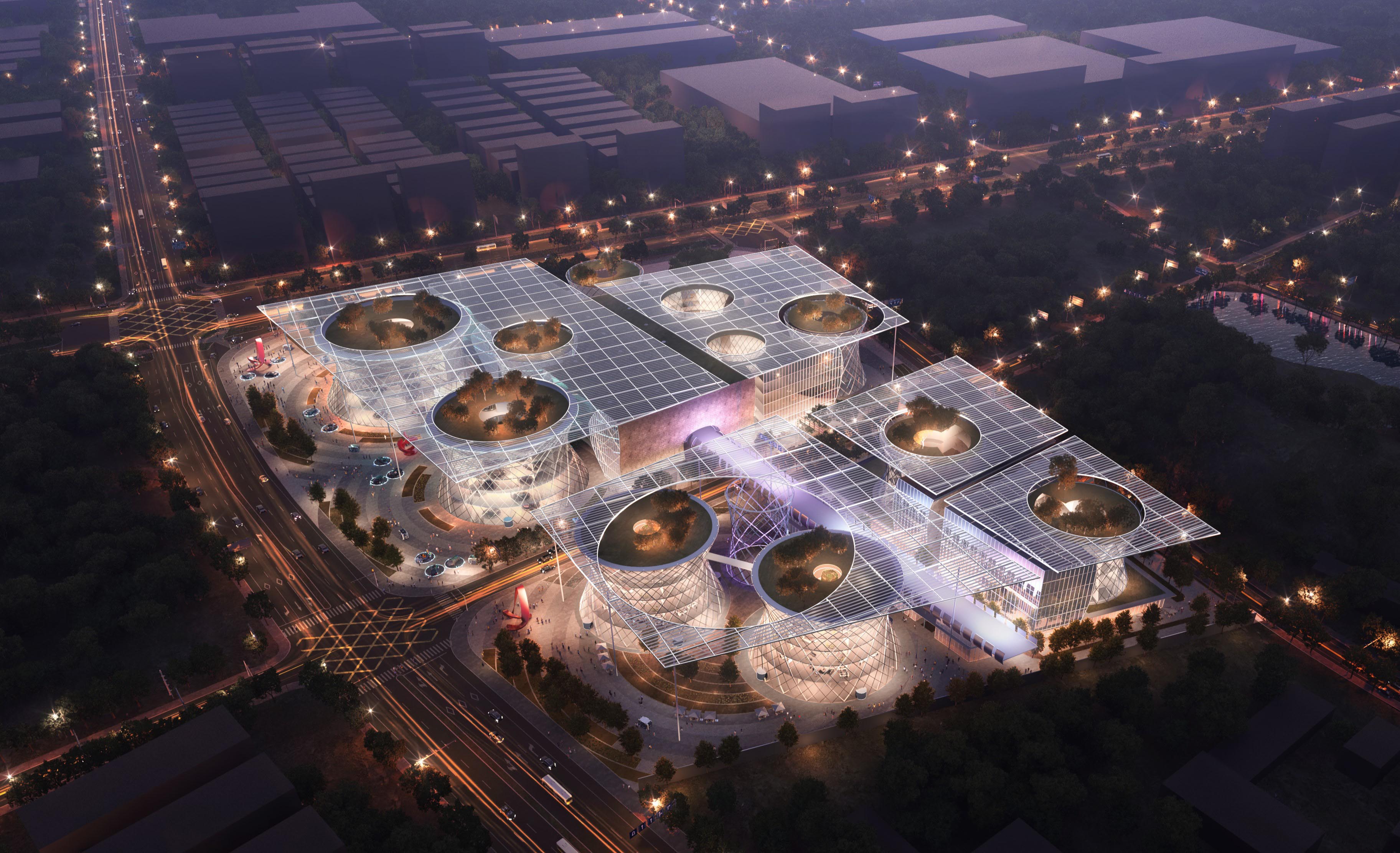
The project’s most recognizable feature is its hourglass-shaped main structure, derived from the study of magnetic field lines and developed to enhance the Solar Chimney effect for natural convection. Sustainability strategies include water circulation systems, solar energy integration, roof shading, and naturally cooled green areas. Despite its scale, the complex remains closely connected to the surrounding urban grid and public systems.